Retaining Walls
Retaining walls, quite simply, retain the ground behind them. They are designed to counteract the force of the ground’s load, either via their own mass, or by an anchoring system.
There are four main types of retaining wall, which can be created with different materials, and each come with their own advantages and disadvantages.
- Gravity Retaining Walls
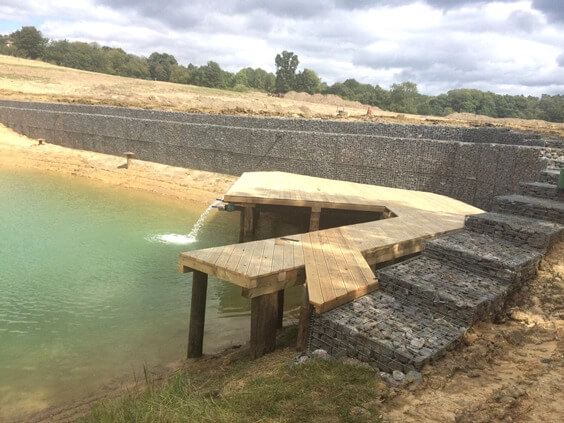
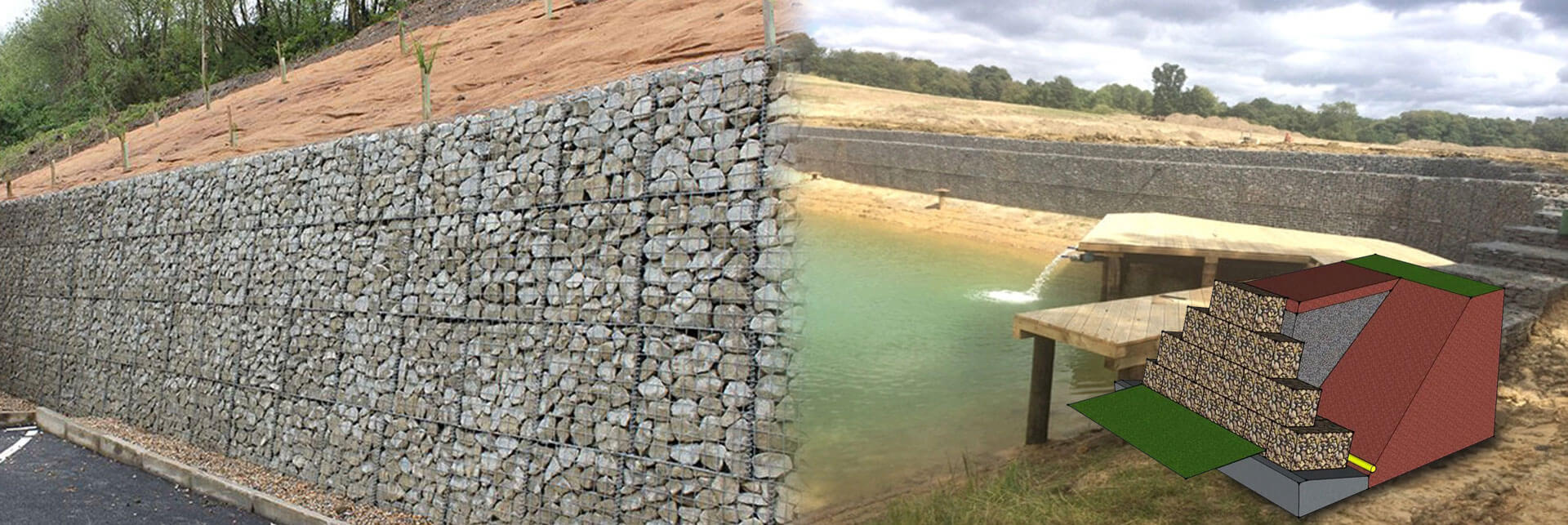
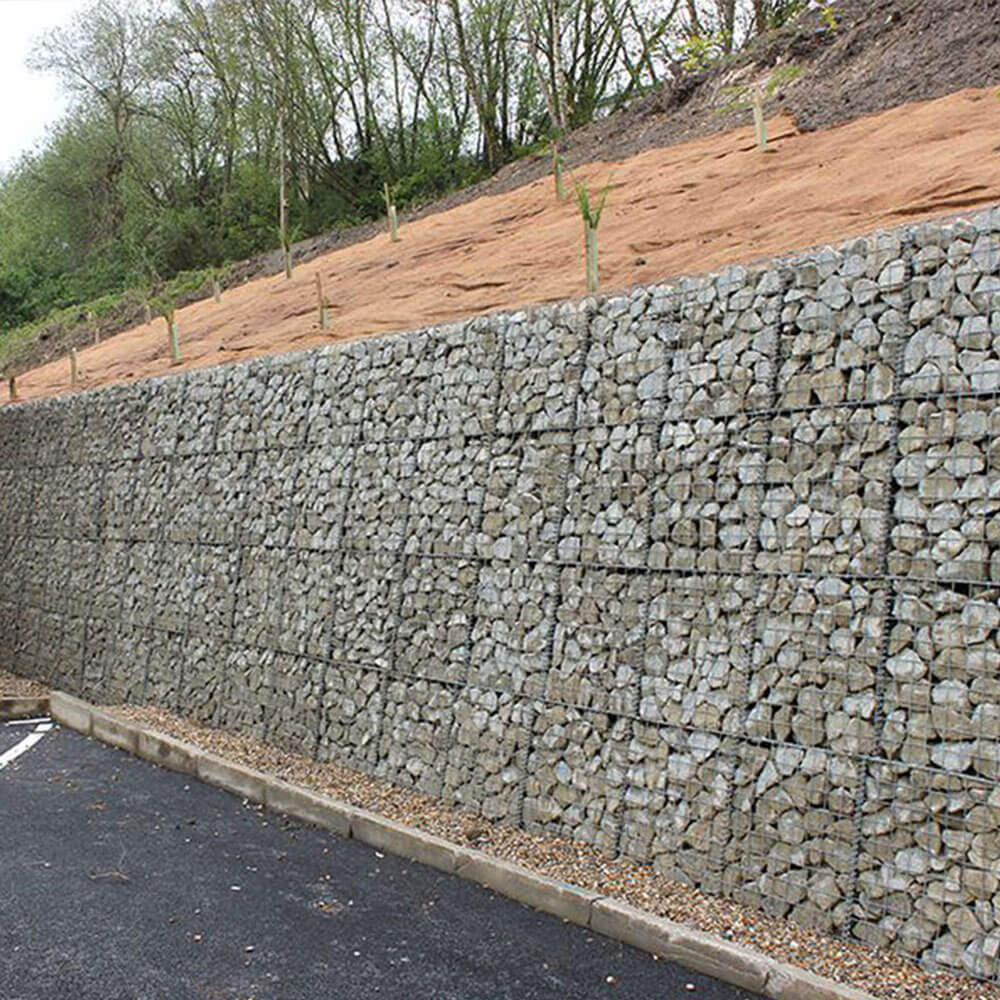
Gravity retaining walls rely on their mass to resist pressure from the load behind, and are therefore made from heavy materials such as stone or concrete. Samslate’s gabion baskets (steel baskets filled with stones) are an excellent example of this, as they do not require concrete footing, unlike most gravity retaining wall systems. Consequently they are easy to install and simple to remove when required.
GET A QUOTE
- Sheet Pile Retaining Walls
Sheet pile retaining walls are often used in areas where there is soft soil and tight spaces.
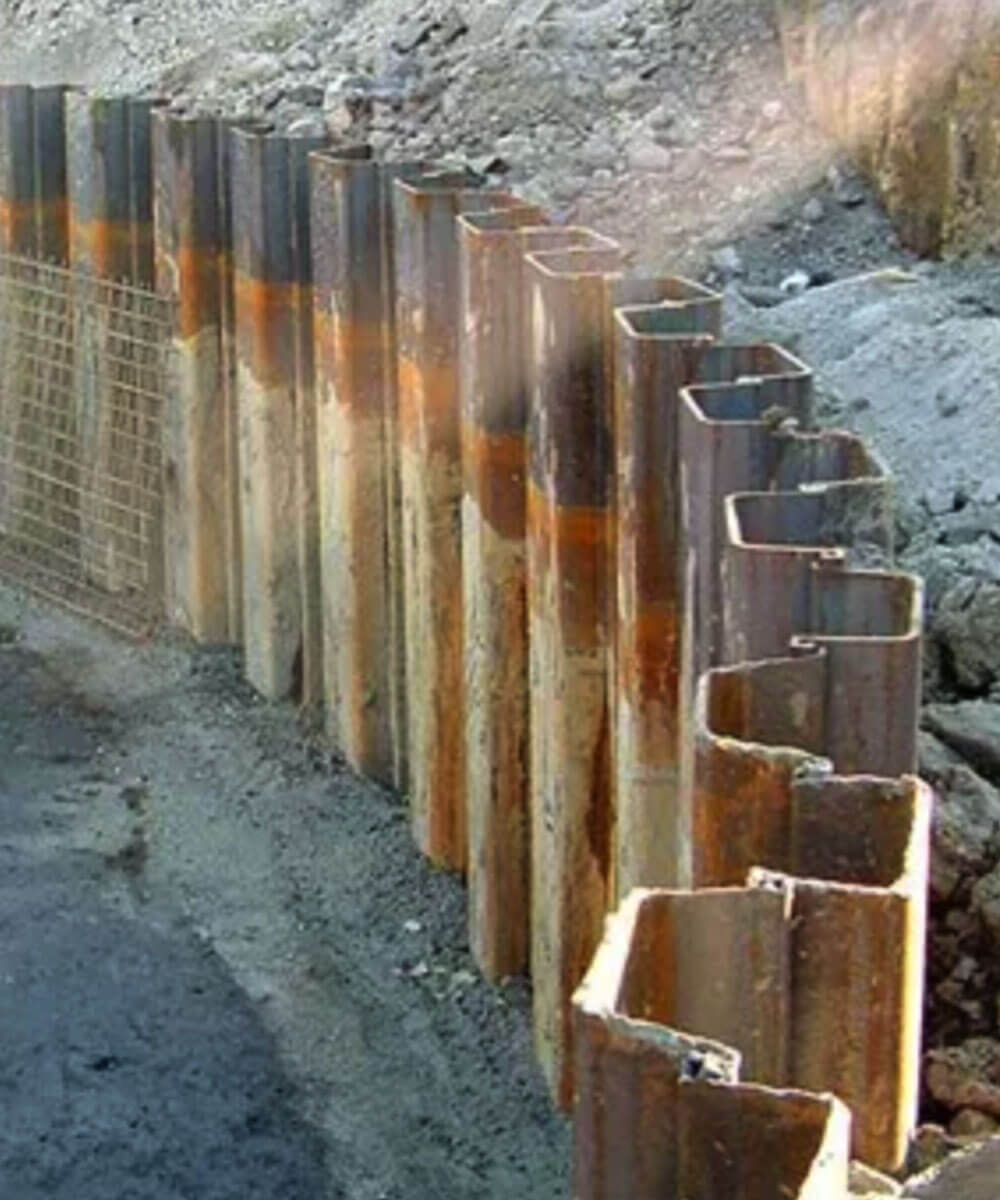
Sheet pile retaining walls are constructed by driving, vibrating or pressing sheet piles into the ground. A degree of robustness is thus required and in this regard steel is used in the manufacture of the sheet piles.
Anchors to anchored sheet pile walling are typically ground anchors, where the anchor comprises a tendon utilising steel bar, or strand tendon centrally located in cement grout, which can be, but not generally, injected under high pressure. The cement grout provides the integrity of the anchor and bond between tendon and surrounding soil.
Other forms of ‘tie back’ anchor can be employed utilising screw anchors or ‘dead man’ anchors, with associated steel rod or strand ties.
The aesthetic appearance of sheet pile walls can be enhanced by the use of a gabion type facing.
Sheet pile walls can be expensive to install as heavy piling machinery is required, which is often hard to manoeuvre in a small space. As an alternative, Samslate’s gabion baskets of a minimum depth of 300mm can be used in small spaces if held by metal or concrete support posts, but a Consultant engineer will be required to assess the installation.
- Sheet Pile Retaining Walls
Sheet pile retaining walls are often used in areas where there is soft soil and tight spaces.
Sheet pile retaining walls are constructed by driving, vibrating or pressing sheet piles into the ground. A degree of robustness is thus required and in this regard steel is used in the manufacture of the sheet piles.
Anchors to anchored sheet pile walling are typically ground anchors, where the anchor comprises a tendon utilising steel bar, or strand tendon centrally located in cement grout, which can be, but not generally, injected under high pressure. The cement grout provides the integrity of the anchor and bond between tendon and surrounding soil.
Other forms of ‘tie back’ anchor can be employed utilising screw anchors or ‘dead man’ anchors, with associated steel rod or strand ties.
The aesthetic appearance of sheet pile walls can be enhanced by the use of a gabion type facing.
Sheet pile walls can be expensive to install as heavy piling machinery is required, which is often hard to manoeuvre in a small space. As an alternative, Samslate’s gabion baskets of a minimum depth of 300mm can be used in small spaces if held by metal or concrete support posts, but a Consultant engineer will be required to assess the installation.
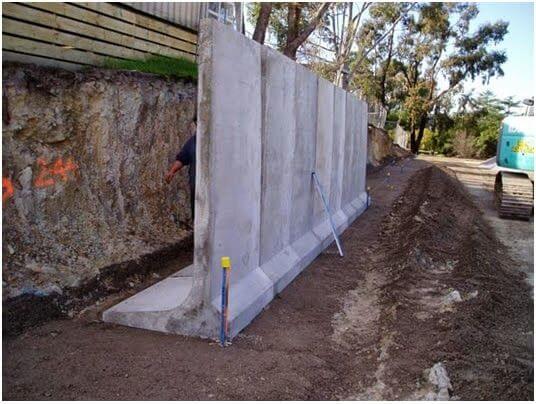
- Cantilever Retaining Walls
Cantilever retaining walls are made from reinforced concrete or mortared masonry. Their reinforced base means that pressure from the ground behind the wall acts vertically rather than horizontally, creating firm structure. However, their installation may be complex and costly, making Samslate’s gabion baskets a great alternative.
- Anchored Retaining Walls
Anchored retaining walls are literally anchored by cables, which are driven into the ground behind the wall and secured by a mechanical expansion, or by injecting pressurised concrete. This method is good for walls with high loads or for reinforcing thin walls, but again installation is likely to be more complex than that for gabion walls.
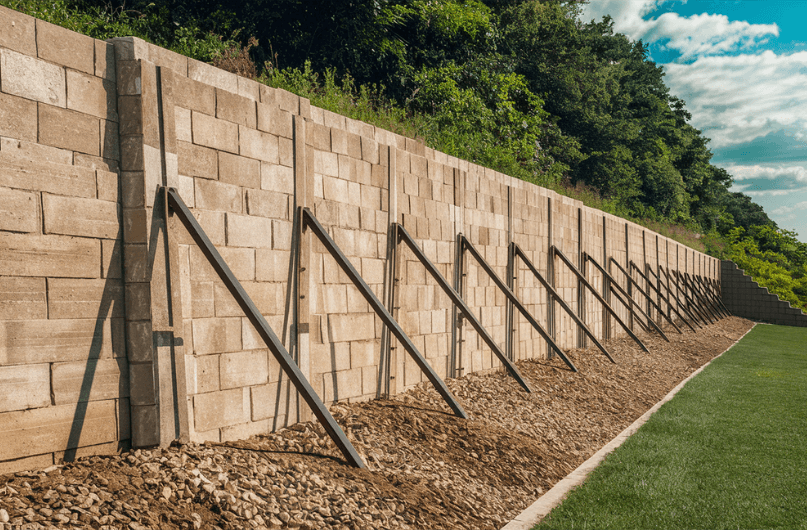
- Anchored Retaining Walls
Anchored retaining walls are literally anchored by cables, which are driven into the ground behind the wall and secured by a mechanical expansion, or by injecting pressurised concrete. This method is good for walls with high loads or for reinforcing thin walls, but again installation is likely to be more complex than that for gabion walls.
What are the main materials used in retaining walls?
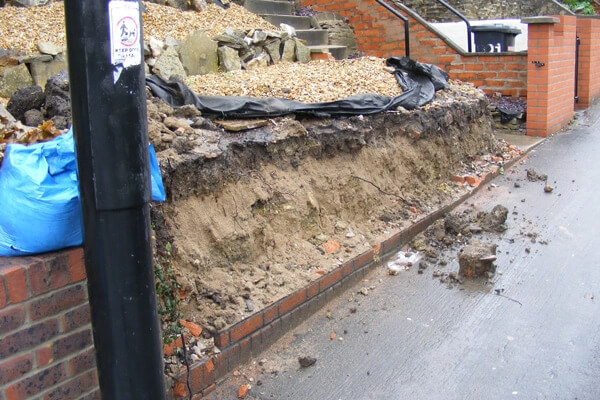
A failed retaining wall made from brick
Brick
Brick retaining walls can be used for low or planter walls, but in general they lack reinforcement and suffer from hydrostatic issues. Weep holes and drainage trenches will aid water movement, but this will involve additional costs.
Timber
Timber is often used for short crib retaining walls but it is susceptible to a build-up of water, which can lead to a dramatic retaining wall failure.

A failed retaining wall made from timber sleepers
A failed retaining wall made from timber sleepers
Timber
Timber is often used for short crib retaining walls but it is susceptible to a build-up of water, which can lead to a dramatic retaining wall failure.
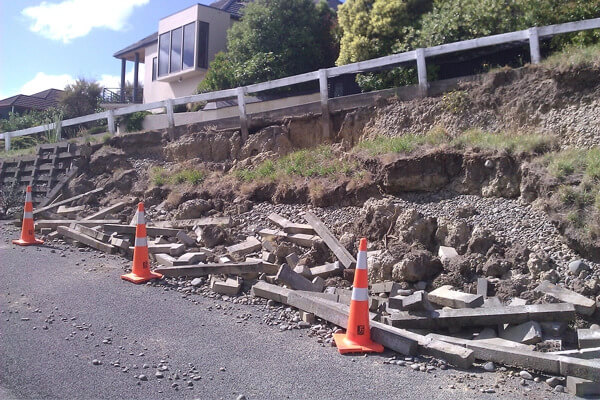
Failed concrete retaining wall
Concrete
Although very sturdy, concrete can be complex to install, and even harder to remove. It is also not very sympathetic to the surrounding landscape.
Steel
Steel is perfect for sheet pile retaining walls as it can be driven into the ground easily, but again the overall installation process may be quite costly.